payload
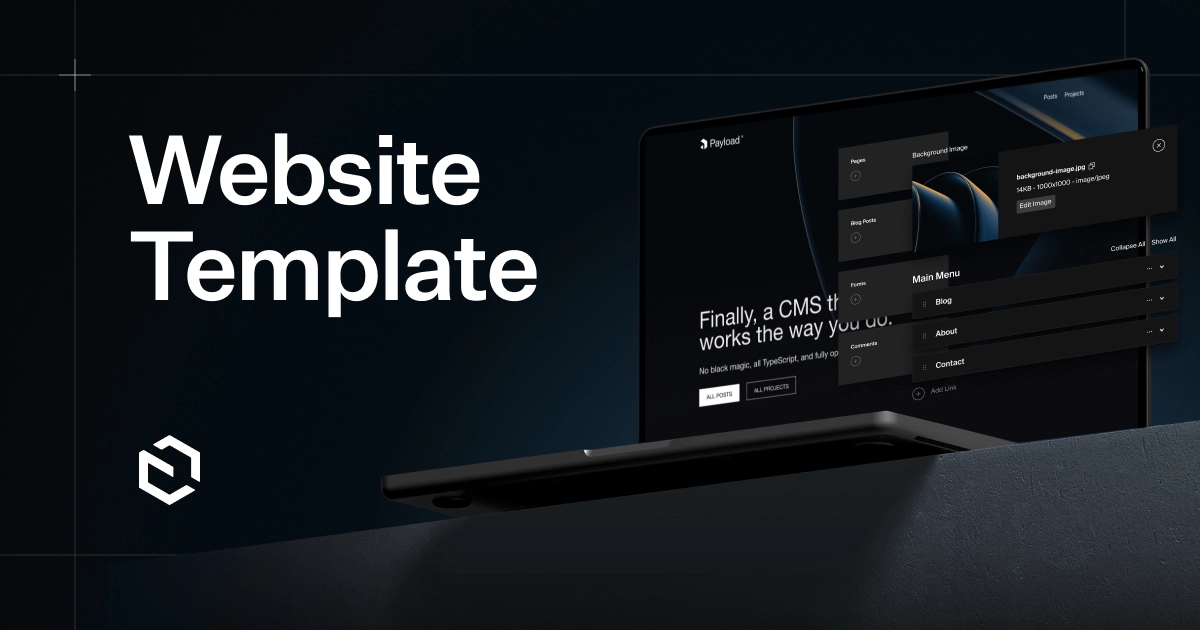
Payload is an open-source headless CMS and Next.js app framework with a React admin panel, auth, drafts, localization, and a block-based editor. It offers a one-click Cloudflare deployment that runs on Workers with R2 for uploads and D1 as the database in the visitor's own account.
- Stars
- 45,822
- Forks
- 4,435
- License
- MIT
- Category
- Content & Publishing
- Latest push
- Published
- Refreshed
- Updated
Review
The bill it replaces
Contentful’s Lite plan costs $300 a month for 20 users and a million API calls. Sanity’s Growth plan is $15 per seat per month, with overages once a project outgrows 25,000 documents and 250,000 API requests. Strapi Cloud’s Pro tier is $90 a month per project. The usual open-source alternative, Strapi’s MIT core, skips the license fee but needs a Node server and its own Postgres, MySQL or MariaDB database, so the bill becomes a VPS plus the hours to patch it.
What Cloudflare gives you, and the gap
Every Cloudflare account already holds the parts: Workers for compute, D1 for serverless SQLite, R2 for object storage, and static asset hosting. None of those is a CMS. The missing layer is the application one: an admin panel an editor can use, authentication, field types, versions and drafts, REST and GraphQL APIs, and media handling. Raw bindings store data; they do not model content.
What Payload packages
Payload 3 is a fullstack Next.js framework. Collections are TypeScript objects, and from them Payload generates typed REST and GraphQL APIs, an admin panel, access control, localization, and a Lexical rich-text editor. The with-cloudflare-d1 template binds that app to the account’s services instead of to a server.
Everything the deployment needs sits in the template’s wrangler.jsonc. One Worker (main: .open-next/worker.js) runs the entire Next.js application under the nodejs_compat and global_fetch_strictly_public flags, with a static assets binding in front of it. A d1_databases binding named D1 holds every collection through @payloadcms/db-d1-sqlite, a Drizzle-backed adapter whose migrations run as part of the deploy script. An r2_buckets binding named R2 receives media uploads through @payloadcms/storage-r2, and a commented NEXT_INC_CACHE_R2_BUCKET slot marks where Next.js’s incremental cache can land. A Deploy to Cloudflare button sits at the top of the template README, and D1 read replicas switch on with readReplicas: 'first-primary', which the docs mark experimental.
Who’s behind it
Payload began in 2018 in Grand Rapids, Michigan, founded by James Mikrut, Dan Ribbens and Elliot DeNolf, and shipped its first public beta in January 2021. The founders went through Y Combinator’s summer 2022 batch, released the project under the MIT license in May 2022, and raised a $4.7 million seed round led by Google’s Gradient Ventures that November. At Config 2025 the team joined Figma, whose CTO wrote that “Payload will remain an open-source product.”
The repo shows no slowdown since. It counts 45,382 stars, 4,313 forks and 436 contributors; v3.91.0 shipped on October 15, 2026, and commits were still landing the day this was reviewed. The npm package draws about 629,000 downloads a week, Payload’s case studies name Microsoft as a customer, and Figma’s announcement already claimed several Fortune 100 companies.
Where it falls short
- The free plan can’t carry it. The template README says it “can only be deployed on Paid Workers right now due to size limits,” and the numbers agree: Workers Free allows 10 ms of CPU per request, while Cloudflare’s own guidance puts server-side rendering at 10 to 20 ms. The floor is the $5 a month Workers Paid plan.
- The D1 adapter is beta. Payload’s docs flag
@payloadcms/db-d1-sqliteas new and open to breaking changes, and D1 read replicas are experimental. - One app, one Worker. The whole Next.js build ships as a single Worker, so traffic past the included 10 million monthly requests bills at $0.30 per million, and D1 writes past 50 million rows a month bill at $1 per million. At small scale none of this lands; at large scale the bill grows with the app.
- Media needs care. Uploads land in R2, and the template README leaves serving them through a CDN as further configuration rather than a default.
Verdict
If you build on Next.js and want editors to have a real admin panel without another subscription or another server, the template puts the whole stack inside your Cloudflare account in one deploy. If your stack isn’t Next.js, or your content needs Postgres-grade queries and enterprise governance on day one, this isn’t your CMS.
Research and source context
This profile is compiled from public repository data. Repository details were captured and the profile was last researched .
More in Content & Publishing
CloudFlare-ImgBed
An open-source image and file hosting hub that can be self-hosted on Cloudflare Pages or Workers, using KV or D1 for metadata and storage channels such as R2, S3-compatible services, Telegram, and WebDAV. It offers uploads, directory organization, authentication, a public gallery, a RESTful API, and WebDAV access.
Telegraph-Image
An image hosting application deployable as a Cloudflare Pages project in the visitor's own account, storing files via the Telegram Bot API or an R2 bucket, with an optional KV-backed management dashboard, short links, Workers AI image review, and basic auth protection.
microfeed
A lightweight self-hosted CMS that publishes audio, video, images, documents, blog posts, and links as a website plus RSS and JSON feeds. It runs on Cloudflare Workers with D1 for metadata and R2 for media, and is deployed into the visitor's own Cloudflare account via a CLI or AI agent.